-

Minimizes soft tissue irritation and improves post-operative comfort in veterinary patients.
Available in 3 mm and 4 mm lengths to support accurate implant selection for varying bone sizes.
Ensures fixed-angle screw engagement and consistent construct stability in veterinary orthopedic surgery.
Provides balanced screw placement and stable load distribution across the fracture site.
Enhances fixation control in metaphyseal and junctional fracture regions in small animals.
-
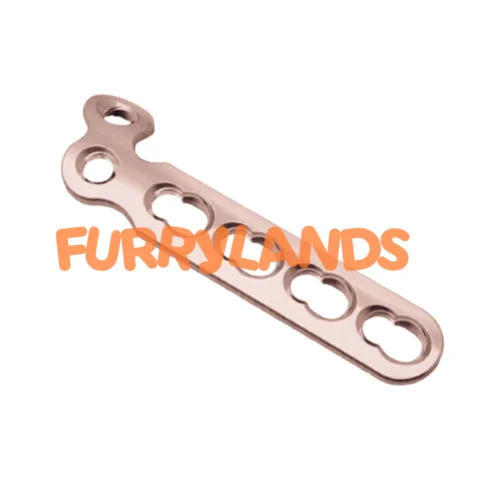
Enhances fixation control in anatomically complex and periarticular fracture regions in small animals.
Provides balanced screw placement and controlled load transfer across the fracture site.
Ensures fixed-angle screw engagement and consistent construct stability in veterinary orthopedic surgery.
Available in 3 mm and 4 mm lengths to support accurate implant selection for varying bone sizes.
Minimizes soft tissue irritation and improves post-operative comfort in veterinary patients.
-
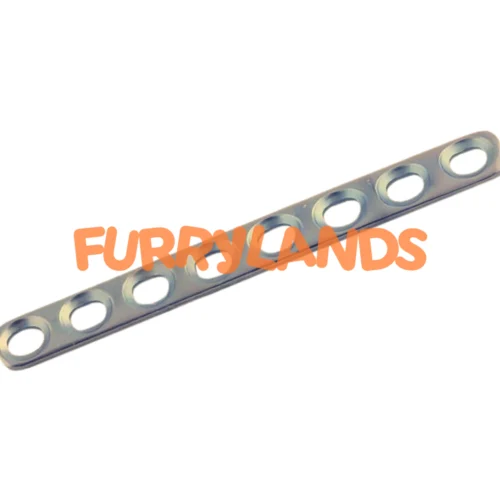
Offered in stainless steel and titanium for strength, corrosion resistance, and biocompatibility.
Available in a range of hole counts to accommodate varying fracture lengths and surgical needs.
Consistent 5 mm hole spacing enables accurate screw placement and predictable fixation.
Ultra-thin 1.2 mm profile minimizes soft tissue irritation and supports biological healing.
Designed specifically for small bones and delicate fracture patterns in veterinary patients.

